2026 How to Choose Yogurt Plastic Cups for Global Sourcing?

Time:2026-10-16 Author:Sophia
0%

Choosing Yogurt Plastic Cups for global sourcing in 2026 requires more than comparing unit prices. Yogurt demand remains closely linked to population growth, urban lifestyles, and expanding cold-chain distribution. FAO food outlook data shows that global milk production continues to exceed 900 million tonnes annually, creating sustained demand for efficient dairy packaging. The cup protects texture, flavor, and shelf life. It also carries the brand through transport, refrigeration, filling, and retail handling.

Packaging decisions now face stronger environmental scrutiny. The OECD Global Plastics Outlook projects global plastic use could rise from 460 million tonnes in 2019 to 1.23 billion tonnes by 2060 without major intervention. That projection makes material efficiency important. Buyers should examine polypropylene or recycled-content options, wall thickness, sealing performance, and end-of-life conditions in each target market. The Ellen MacArthur Foundation’s Global Commitment reports also emphasize recyclable design, recycled content, and transparent packaging data. Recycling access differs sharply between countries. One solution cannot fit every market.

A reliable sourcing process should test cup dimensions, oxygen resistance, drop strength, freezer behavior, and heat-seal consistency. Ask suppliers for food-contact declarations, migration test results, batch traceability, and documented quality systems. A cheaper mold may create uneven rims or weak seals. That mistake becomes expensive after filling. No cup is perfect. A lightweight design may reduce resin use but increase deformation risk. This guide compares practical trade-offs across materials, suppliers, certifications, tooling, logistics, and regional compliance. Its aim is simple: help buyers select Yogurt Plastic Cups that protect the product, control total cost, and support credible sustainability claims.
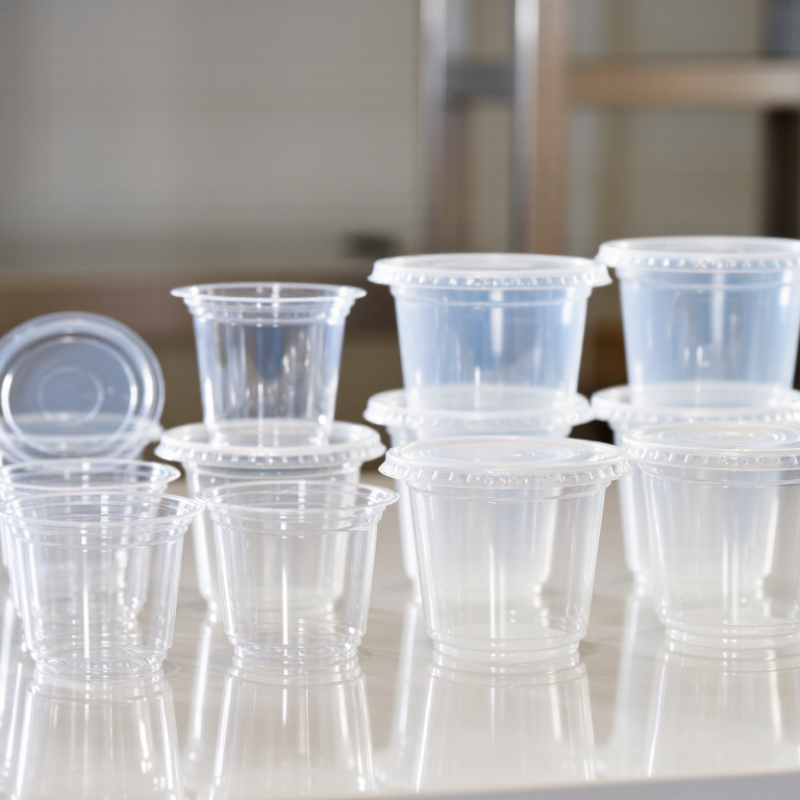
2026 How to Choose Yogurt Plastic Cups for Global Sourcing?

Define Yogurt Cup Requirements for Global Markets

Choosing yogurt plastic cups for global sourcing starts with a clear market specification.

Define the yogurt type, filling temperature, shelf life, serving size, and distribution route. High-acid yogurt may require different barrier performance than chilled, short-life products. Cup dimensions must match filling lines and secondary packaging. Fit matters.

The OECD-FAO Agricultural Outlook 2024-2033 projects global milk production to grow by about 1.6% annually. This growth increases demand for scalable, consistent packaging. Specify resin type, wall thickness, lid compatibility, seal strength, and allowable weight variation. Polypropylene can support heat resistance and lightweight designs, but local recycling systems differ widely. A cup that performs well in one country may be difficult to recover elsewhere. Test it.

Sourcing teams should request migration testing, food-contact declarations, batch traceability, and independent quality records. Verify performance after cold-chain transport, stacking, vibration, and temperature changes.

The UNEP report Turning off the Tap states that global plastic pollution could be reduced by 80% by 2040 through reuse, recycling, and material reduction. That target encourages lighter cups, but reduced thickness can weaken sealing or stacking strength. I would not accept a sustainability claim without measured data. Compare actual material weight, recycled content, recyclability evidence, and factory energy records. Assumptions fail. Supplier audits, pilot runs, and retained samples provide stronger evidence than attractive specifications alone.

Compare Plastic Types, Safety Standards, and Sustainability Options

Choosing yogurt plastic cups for global sourcing requires more than comparing unit prices. Polypropylene (PP) handles filling and moderate heat well, while polystyrene (PS) can offer stiffness but faces weaker recycling access in many markets. Polyethylene terephthalate (PET) provides clarity and strength, yet its performance depends on forming conditions and lid compatibility. Ask suppliers for resin specifications, wall-thickness data, and actual production samples. A cup that looks strong may crack after cold storage.

Food-contact safety needs documented evidence. Request migration test reports for the finished cup, not only the raw resin. Check testing conditions against yogurt acidity, storage time, and temperature. Declarations of compliance, traceability records, and batch-control procedures should be available before purchase. Inspect the rim closely. Small sealing defects can cause leaks, contamination risks, and rejected shipments. Requirements differ between destination markets, so one certificate may not cover every country.

Sustainability choices need practical judgment. Lightweighting reduces material use, but overly thin walls may increase waste through damage. Mono-material designs can simplify recycling, while recycled content may require stricter odor, color, and food-contact verification. Bio-based plastic is not automatically compostable. That confusion remains common. Ask whether local facilities can actually process the selected material. Pilot testing should include stacking, transport vibration, refrigeration, sealing, and shelf-life checks. Cost models should include damaged goods and disposal limits, not just the cup price. The best option may still involve trade-offs.

2026 How to Choose Yogurt Plastic Cups for Global Sourcing?

Compare plastic types, food-contact safety standards, and sustainability options

Typical resin density is shown in grams per cubic centimeter. Lower-density materials may reduce material weight, but final sustainability performance also depends on cup design, barrier layers, recycled content, local collection systems, and recycling infrastructure. Values are representative ranges for common food-packaging grades; actual grades can vary.

Plastic type Common recycling code Food-contact compliance to verify Sustainability sourcing option
Polypropylene (PP) #5 Applicable FDA food-contact requirements, EU Framework Regulation 1935/2004 and Plastics Regulation 10/2011, or the destination market’s equivalent Lightweight design and increasing access to post-consumer recycled PP, subject to local approval and availability
High-density polyethylene (HDPE) #2 Confirm food-contact resin, additives, colorants, migration testing, and declarations of compliance Established recycling streams in many markets; recycled HDPE may be considered where food-contact rules permit
Polystyrene (PS) #6 Verify current national food-contact authorization and migration limits, especially for additives and processing aids Recycling acceptance is more limited in many regions; check the actual destination-market collection system
Polyethylene terephthalate (PET) #1 Confirm food-contact authorization, recycled-content eligibility, and applicable decontamination requirements Strong bottle-to-bottle recycling infrastructure in many markets; cup-form recycling can still vary by region

For global sourcing, request a material specification, food-contact declaration, migration-test documentation, recycled-content statement, and confirmation of compliance with the destination market. Common references include U.S. FDA regulations, EU Regulations 1935/2004 and 10/2011, China GB 4806.7, and Japan’s positive-list system. Always verify the latest local requirements before production.

Evaluate Cup Size, Shape, Sealing, and Labeling Features

Global yogurt sourcing begins with the serving size consumers can comfortably finish. Small cups suit children and quick snacks, while larger cups support family portions. Confirm the fill volume, headspace, and stacking height before comparing prices. A cheaper cup may increase product waste. I have seen narrow cups create filling problems during high-speed production. That mistake was avoidable.

Shape affects machine performance, storage, and handling. A stable base reduces tipping in cartons and refrigerated displays. Rounded walls may release yogurt more easily, but they can reduce label space. Request technical drawings, production samples, and dimensional tolerances from each supplier. Do not judge only from a clean sample. Small variations can affect the lid fit. Test sealing strength, peel performance, leakage, and cold-chain durability. One laboratory pass is not enough. Repeat testing after transport simulation and refrigeration.

Labeling needs equal attention. Measure the printable area around the entire cup, including tapered sections. Check adhesive performance on cold, slightly damp surfaces. Verify barcode readability after condensation and handling. Ink resistance also matters when cartons rub together. I once assumed a larger label was automatically better. It was not. The label wrinkled near the rim and interrupted sealing. Use approved artwork files, clear placement limits, and inspection samples. Leave room for manufacturing tolerances. A reliable sourcing decision connects cup geometry, sealing results, and label performance rather than treating them as separate details.

Verify Suppliers, Quality Control, Certifications, and Production Capacity

2026 How to Choose Yogurt Plastic Cups for Global Sourcing?

When sourcing yogurt plastic cups in 2026, verify the supplier before discussing price. Request legal registration, factory address, ownership details, and recent customer references. A video call is useful, but an on-site audit reveals more. Check the molding area, storage conditions, and hygiene controls. Ask whether the factory produces food-contact packaging regularly. Their answers should match production records, not only a sales presentation. Keep every document dated and traceable.

Quality control must cover more than appearance. Request material specifications, thickness tolerances, seal compatibility, and food-contact test reports. Certifications should match the destination market and current regulatory requirements. Confirm their scope, expiry date, issuing body, and audited site. A certificate alone proves little. Inspect sample cups for warped rims, pinholes, sharp edges, and weak stacking strength. Test filled cups through transport simulation and refrigeration. My own mistake was approving a smooth sample before testing the lid seal. It failed after vibration.

Production capacity needs practical evidence. Review molding-machine numbers, mold ownership, shift patterns, and average monthly output. Ask for capacity during peak seasons, not only normal weeks. Confirm resin supply, spare parts, backup electricity, and maintenance procedures. Request a pilot order with documented inspection checkpoints. Track defect rates, delivery accuracy, and corrective actions. Suppliers may promise flexible capacity. Verify it with schedules, machine records, and a factory walk-through. Small gaps often appear there.

2026 How to Choose Yogurt Plastic Cups for Global Sourcing? - Verify Suppliers, Quality Control, Certifications, and Production Capacity

Category Evaluation Dimension Data or Evidence to Request Recommended Acceptance Benchmark Verification Method
Supplier Verification Legal and manufacturing identity Registered legal entity, factory address, manufacturing scope, export markets, business license, and authorization for the production site All legal documents should identify the same operating entity and physical production location Document review and independent address verification
Supplier Verification Food-contact manufacturing controls Process flow, hygiene zoning, pest-control records, employee hygiene rules, traceability procedure, complaint handling, and product-recall procedure Documented procedures with retained records and a traceable batch or lot identification system Remote document audit followed by an on-site or third-party audit
Material Compliance Resin and additive traceability Polymer type, resin grade, supplier declaration, additive list where applicable, recycled-content statement, and batch certificates Material identity and food-contact suitability must match the approved specification and destination-market requirements Review declarations, batch records, and independent laboratory reports
Certifications Food-safety management certification Valid certificate for ISO 22000, FSSC 22000, BRCGS Packaging Materials, or another scheme accepted by the buyer Certificate scope must cover the actual site and the manufacture of plastic food-contact packaging Check certificate number, validity, scope, issuing body, and certification directory
Certifications Quality management system ISO 9001 certificate, quality manual, corrective-action records, calibration records, and internal-audit schedule A current certificate with a scope covering design, production, or supply of the relevant packaging products Certificate validation and review of recent quality records
Regulatory Fit Destination-market food-contact compliance Declaration of compliance and supporting test reports for the importing market, such as EU Regulation (EC) No 1935/2004, EU Regulation (EU) No 10/2011 for plastic materials, or applicable U.S. FDA food-contact requirements Documents must identify the material, intended food-contact conditions, limitations of use, and applicable legal references Regulatory review by the importer or qualified compliance specialist
Quality Control Dimensional accuracy Drawing with rim diameter, height, wall thickness, bottom diameter, nesting dimensions, and applicable tolerances Use buyer-approved tolerances; a common project starting point is approximately ±0.20 mm for critical dimensions, subject to design and process capability Calibrated gauges, first-article inspection, and production sampling
Quality Control Leakage and sealing performance Seal compatibility with the selected lid, heat-sealing window, seal strength, vacuum or pressure test method, and transport simulation results Zero leakage in the agreed sample and no seal failure after the specified filling, stacking, and transport tests Production-line seal test plus independent pre-shipment testing
Quality Control Visual defects and cleanliness Inspection criteria for black specks, contamination, dents, short forming, flash, deformation, odor, color variation, and foreign matter No critical defects; major and minor defect limits must be defined in the approved quality agreement Controlled-light visual inspection and documented defect classification
Quality Control Sampling and inspection plan Inspection level, sample size, defect classification, AQL values if used, test equipment, and release criteria Use a documented plan based on ISO 2859-1 or an equivalent agreed sampling standard; critical defects should have zero acceptance Approve the plan before mass production and verify during pre-shipment inspection
Production Capacity Machine and mold capability Forming technology, number of cavities, cycle time, machine availability, mold ownership, maintenance plan, and backup equipment Capacity should cover forecast demand plus agreed safety capacity, without relying on undocumented subcontracting Review machine list, mold records, maintenance logs, and production-floor evidence
Production Capacity Capacity calculation Illustrative formula: 16 cavities × 12 cycles/minute × 60 minutes × 20 operating hours/day × 26 days/month = 5,990,400 cups/month before efficiency losses Apply actual uptime, changeover, scrap, maintenance, and labor constraints; an 80% effective output in this illustration equals approximately 4,792,320 cups/month Compare the calculation with production records and shipment history; do not rely only on stated maximum capacity
Production Capacity Lead time and continuity planning Tooling lead time, sample lead time, standard production lead time, raw-material replenishment time, holiday calendar, and business-continuity plan Lead times must be written into the purchase agreement with escalation rules for delays and material shortages Validate with historical delivery data and a documented contingency plan
Commercial Risk Tooling, ownership, and change control Mold specification, ownership terms, storage location, maintenance responsibility, spare-parts plan, and approval process for material or process changes No material, mold, dimensional, or process change without documented buyer approval and updated compliance evidence Include requirements in the tooling agreement and quality agreement
Final Selection Supplier scorecard Weighted scores for compliance, quality, capacity, cost, lead time, communication, audit results, and corrective-action performance Use a documented minimum score and treat food safety, regulatory compliance, and traceability as mandatory pass/fail criteria Approve only after sample validation, compliance review, factory assessment, and successful pilot production
Note: Acceptance limits should be finalized in the product specification, quality agreement, purchase contract, and destination-market regulatory assessment. Capacity figures shown above are calculation examples, not claims about any specific supplier.

Calculate Costs, Logistics, Import Rules, and Long-Term Supply Risks

Choosing yogurt plastic cups in 2026 requires more than comparing factory prices. Calculate landed cost: cup price, tooling, inland transport, ocean freight, insurance, duty, testing, and rejected inventory. A cup priced at $0.03 may exceed $0.05 after freight and compliance costs. The World Bank’s Logistics Performance Index 2023 compares 139 economies, showing major differences in customs, infrastructure, and shipment reliability. Request delivery records by route, not general supplier promises. Cold-chain delays can also damage yogurt quality before filling.

Import rules can change the best material choice. Food-contact documentation should cover resin identity, additives, migration testing, and production-site controls. For European sales, check Regulation (EC) No 1935/2004, plastic rules under Regulation (EU) No 10/2011, and the Packaging and Packaging Waste Regulation (EU) 2025/40. The latter begins applying from August 2026. In the United States, verify applicable FDA food-contact requirements. OECD’s Global Plastics Outlook projects plastic waste could nearly triple by 2060, while global recycling remains limited. Recycled content may reduce impact, but it can complicate color, odor, and food-contact approval.

Tips: Compare three landed-cost scenarios. Test one shipment. Keep a six-month safety stock only when storage conditions are proven. Ask for resin traceability, audit reports, recall procedures, and backup tooling. A second supplier sounds sensible, yet dual sourcing can raise mold and validation costs. I would challenge any forecast based on stable freight rates. They rarely stay stable. Review customs classification with a qualified broker before signing long-term volume commitments.

FAQS

How should I choose the right yogurt cup size?

Match the cup to realistic serving habits. Small cups suit children and quick snacks, while larger cups support family portions. Confirm fill volume, headspace, and stacking height. A cheaper cup may create more waste.

Why does cup shape matter during production?

A stable base reduces tipping in cartons and refrigerated displays. Rounded walls may release yogurt more easily, but they can reduce label space. Narrow cups can cause filling problems on fast production lines. I overlooked this once.

What technical information should suppliers provide?

Request technical drawings, production samples, and dimensional tolerances. Compare several samples, not only one clean prototype. Small size variations can affect lid fit and stacking stability.

How can I test cup sealing performance?

Check sealing strength, peel performance, leakage, and refrigeration durability. Repeat tests after transport simulation and cold storage. One laboratory pass is not enough. Test twice.

What labeling details require attention?

Measure the printable area around the entire cup, including tapered sections. Check label adhesion on cold, slightly damp surfaces. Verify barcode readability after condensation and handling.

Can a larger label improve packaging communication?

Not always. A large label may wrinkle near the rim and interrupt sealing. Leave clear placement limits and allow space for manufacturing tolerances. Bigger is not automatically better.

What costs should be included when comparing cup suppliers?

Calculate cup price, tooling, inland transport, freight, insurance, duties, testing, and rejected inventory. Compare at least three landed-cost scenarios. A cup priced at three cents may exceed five cents after additional costs.

How can I reduce long-term sourcing risks?

Request delivery records by route, resin traceability, audit reports, recall procedures, and backup tooling. Test one shipment before making large commitments. Keep safety stock only when storage conditions are proven. Freight forecasts can be wrong.

Conclusion

Choosing the right Yogurt Plastic Cups for global sourcing in 2026 requires a structured evaluation of market needs, product safety, functionality, and supply reliability. Buyers should first define target consumers, serving sizes, storage conditions, and regional preferences. They can then compare suitable plastic materials by reviewing food-contact safety, durability, recyclability, recycled content, and overall sustainability goals. Cup shape, wall strength, stackability, sealing compatibility, labeling space, and tamper-evident features should also match production and distribution requirements.

A reliable sourcing decision depends on thorough supplier verification, including manufacturing experience, quality-control procedures, certifications, testing records, production capacity, and contingency planning. Total cost calculations should cover tooling, materials, packaging, transportation, customs, warehousing, and potential import requirements rather than focusing only on unit price. Buyers should also assess lead times, minimum order quantities, currency fluctuations, material availability, and long-term supply risks. By balancing performance, compliance, cost efficiency, and environmental objectives, companies can establish a stable and scalable yogurt cup supply program for multiple global markets.

Sophia

Sophia

Sophia is a dedicated marketing professional with an exceptional depth of knowledge about her company's products and services. With a keen understanding of market trends and customer needs, she crafts insightful blog posts that not only inform but also engage readers, enriching the company’s online......